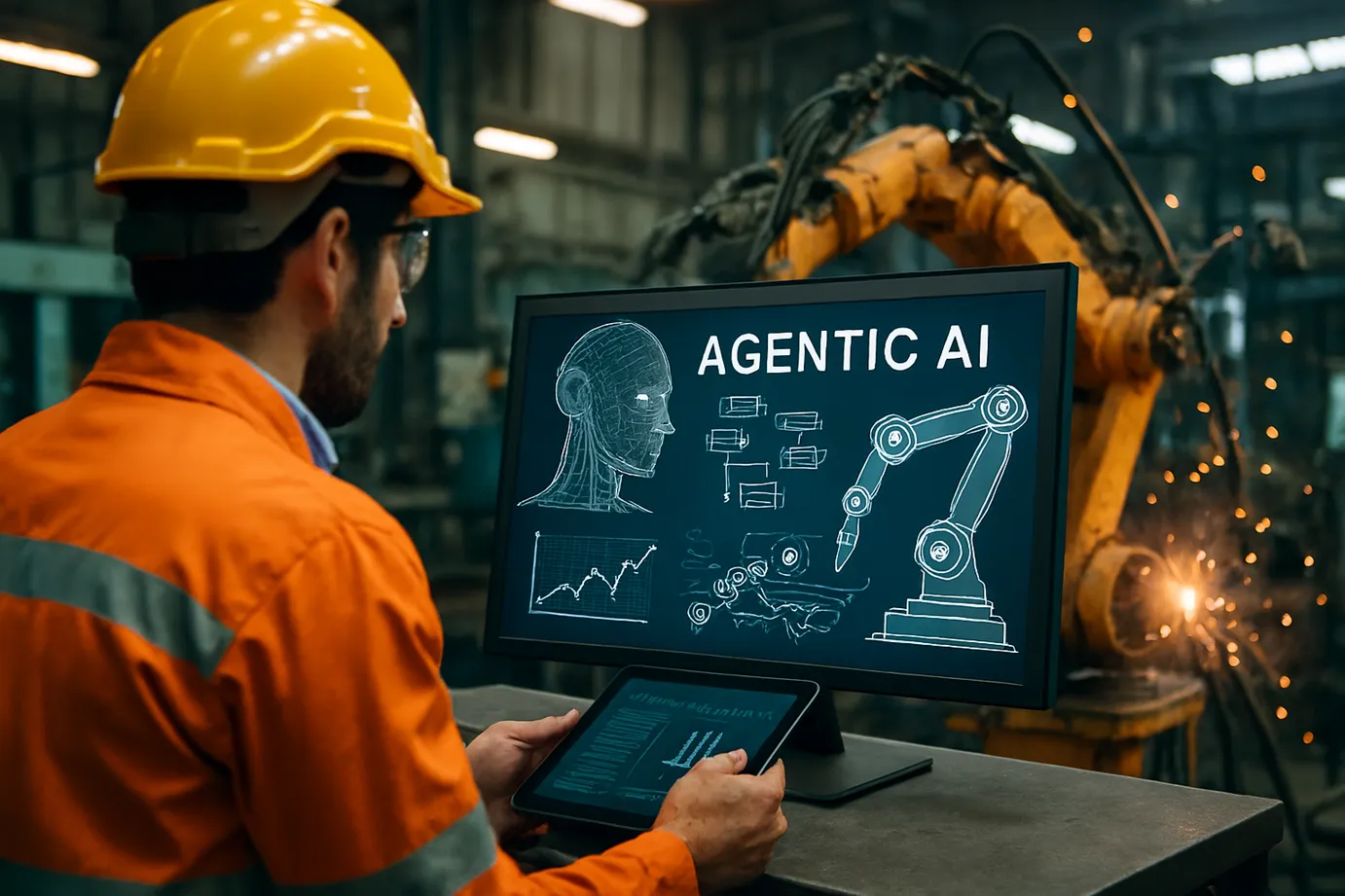
Artificial Intelligence is no longer limited to chatbots and prediction models. A new evolution calledAgentic AIis transforming how businesses operate. Instead of just responding to commands, AI systems are now capable of planning, deciding, and taking actions independently. These systems are known asAI Agents.
Let’s understand this in a simple and practical way.
What is Agentic AI?
Agentic AIrefers to AI systems that can act autonomously to achieve a specific goal. Unlike traditional AI models that wait for instructions, agentic AI can:
- Understand objectives
- Break them into smaller tasks
- Make decisions
- Execute actions
- Learn from outcomes
- Adjust strategy dynamically
In simple words, it behaves more like a digital employee rather than just a tool.
For example:
- A traditional AI chatbot answers customer queries.
- An AI agent can handle the entire support workflow — receive complaint, verify customer data, process refund, update CRM, and send confirmation — without human intervention.
That’s the difference.
How AI Agents Work
AI agents combine multiple capabilities:
- Large Language Models (LLMs) – For understanding and communication
- Memory Systems – To remember past interactions
- Tools Integration – APIs, databases, CRMs, ERP systems
- Decision Logic – To choose best actions
- Automation Engines – To execute tasks
They operate in a loop:Observe → Think → Act → Learn → Improve
This continuous cycle allows them to optimize operations over time.
How AI Agents Reduce Costs in Industry
Now let’s talk business impact — the real reason companies are investing in agentic AI.
1. Reduction in Manual Labor Costs
AI agents can automate repetitive tasks such as:
- Data entry
- Invoice processing
- Customer support
- Email handling
- HR screening
Instead of hiring multiple employees for routine work, one AI agent can manage large volumes 24/7.
Impact:Lower salary expenses + no overtime + no human errors.
2. Improved Operational Efficiency
AI agents work continuously without breaks, delays, or performance drops. This reduces turnaround time in:
- Manufacturing workflows
- Order processing
- Supply chain management
- IT ticket resolution
Faster processes mean reduced operational bottlenecks and improved productivity.
Impact:More output with the same infrastructure.
3. Reduced Error & Rework Costs
Human mistakes in finance, healthcare, logistics, and manufacturing can be expensive.
AI agents:
- Follow predefined logic
- Validate data automatically
- Flag inconsistencies
- Maintain compliance
Fewer errors mean:
- Lower penalty risks
- Reduced product returns
- Less rework
4. Smarter Resource Allocation
AI agents can analyze real-time data and optimize:
- Inventory levels
- Energy consumption
- Workforce scheduling
- Transport routes
For example, in manufacturing plants, AI agents monitor machine performance and predict maintenance needs — preventing costly downtime.
This concept is widely used in predictive maintenance models adopted by companies like Siemens and General Electric.
Impact:Lower maintenance cost + increased equipment lifespan.
5. Enhanced Customer Support at Lower Cost
Instead of large call center teams, AI agents can:
- Handle 80–90% of routine queries
- Escalate only complex cases
- Provide instant multilingual support
Companies like Amazon use AI-driven systems to automate customer interactions, reducing operational expenses while improving response time.
Impact:Lower support staffing cost + improved customer satisfaction.
6. Data-Driven Decision Making
AI agents continuously analyze business data and generate insights.
They help leadership:
- Predict demand
- Forecast sales
- Identify inefficiencies
- Optimize pricing
Instead of expensive consulting analysis cycles, AI agents provide real-time insights.
Industries Benefiting from Agentic AI
Manufacturing
- Predictive maintenance
- Quality control automation
- Supply chain optimization
Healthcare
- Patient scheduling
- Insurance claims automation
- Medical documentation
Finance
- Fraud detection
- Automated loan processing
- Risk assessment
IT & Tech
- Automated DevOps monitoring
- Incident resolution
- Code testing and debugging
Retail & E-commerce
- Inventory management
- Dynamic pricing
- Personalized marketing
Strategic Advantage: Beyond Cost Reduction
While cost reduction is a major benefit, agentic AI also provides:
- Scalability without proportional hiring
- Faster innovation cycles
- Competitive differentiation
- Improved customer experience
Companies that adopt AI agents early gain operational agility.
The Future of Agentic AI
Agentic AI represents a shift from “AI as a tool” to “AI as a digital workforce.”
In the coming years, businesses will deploy multiple specialized AI agents:
- Sales agent
- Marketing agent
- HR agent
- Finance agent
- Operations agent
These agents will collaborate, similar to departments in an organization.
Final Thoughts
Agentic AI is not just automation — it is autonomous execution.
By reducing labor costs, minimizing errors, improving efficiency, and enabling smarter decisions, AI agents are becoming a strategic asset for industries worldwide.
Organizations that strategically integrate agentic AI today will not only reduce costs but also unlock new growth opportunities tomorrow.