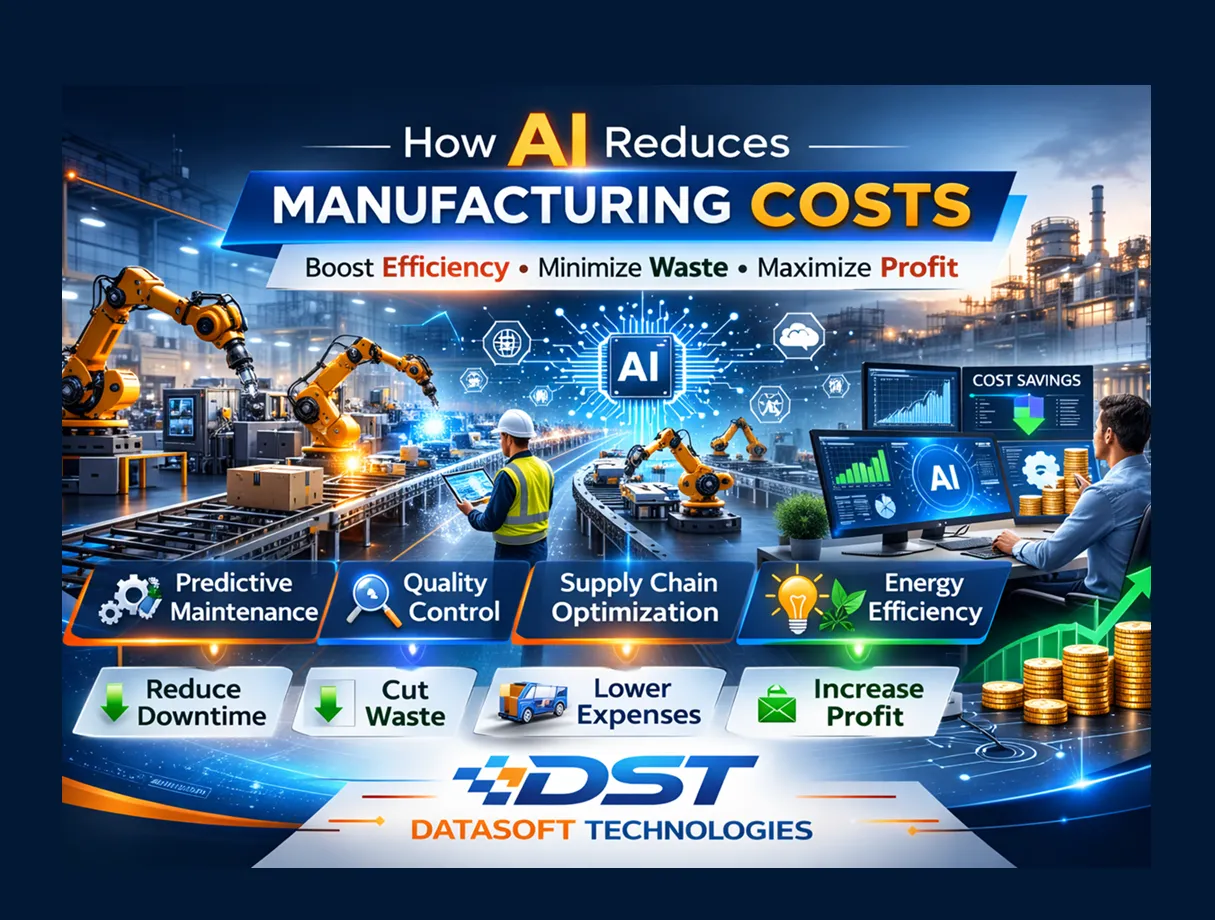
Manufacturing has always been about one core objective:produce more, waste less, and deliver faster.
Today, Artificial Intelligence is transforming that objective from an ambition into a measurable reality.
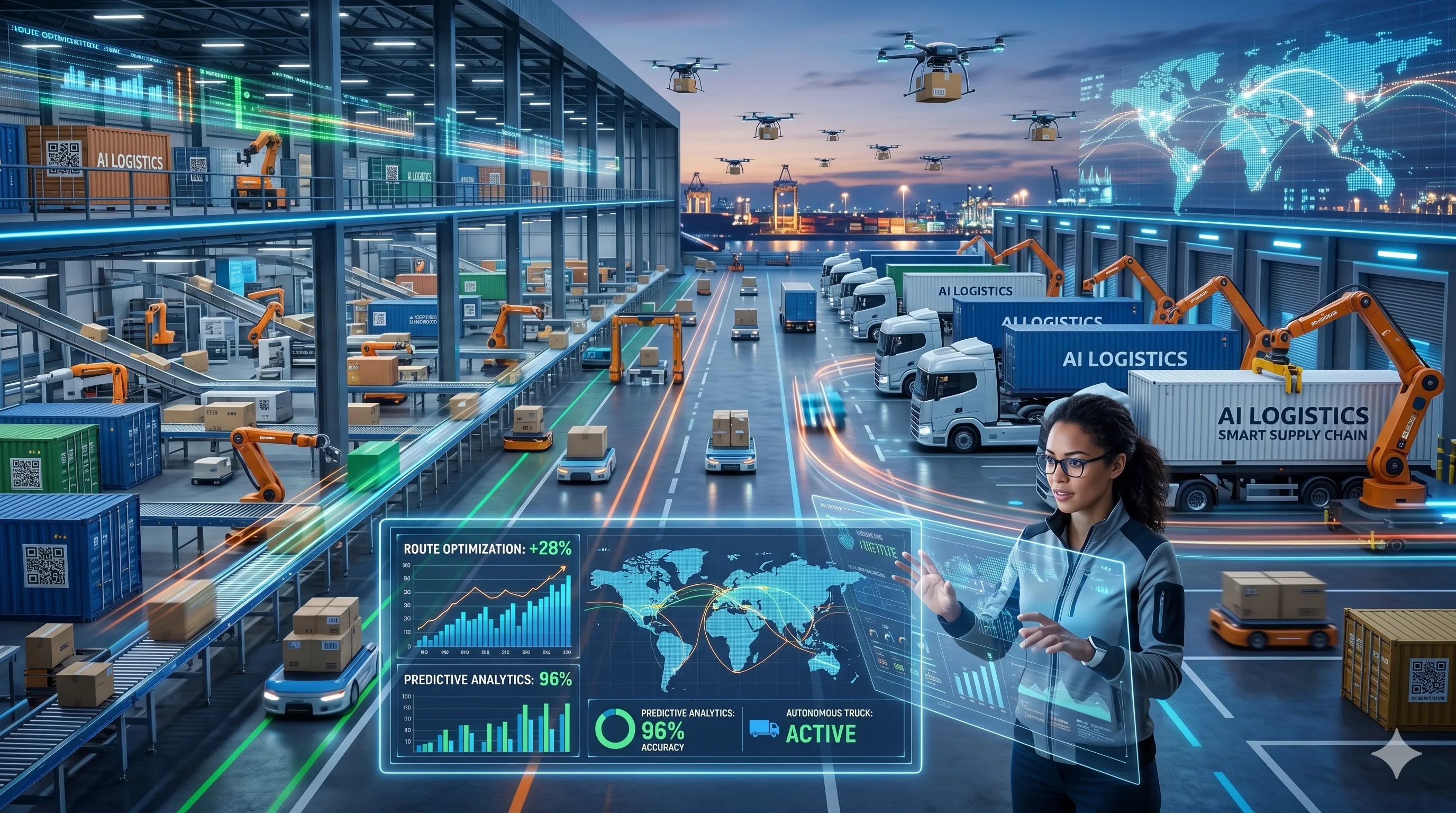
AI is no longer a futuristic concept inside factories. It is actively reducing costs, minimizing downtime, improving quality, and reshaping supply chains across the globe.
Let’s explore how.
1. Predictive Maintenance: Eliminating Expensive Downtime
Unplanned machine breakdowns are one of the biggest hidden costs in manufacturing.
AI-powered predictive maintenance systems analyze sensor data in real time to detect anomalies before failure happens. Instead of reacting to breakdowns, companies prevent them.
The result:
- Reduced downtime
- Lower maintenance costs
- Extended equipment lifespan
- Improved production continuity
Downtime is expensive. Prevention is profitable.
2. Intelligent Quality Control: Reducing Waste
Traditional quality checks rely heavily on manual inspection. AI-powered computer vision systems can now detect microscopic defects instantly and with higher accuracy than humans.
This means:
- Fewer defective products
- Less material waste
- Reduced rework costs
- Stronger brand reputation
Quality is no longer inspected at the end. It is optimized during production.
3. Supply Chain Optimization: Smarter Inventory Management
Overstocking ties up capital. Understocking delays production.
AI models analyze demand patterns, supplier performance, market trends, and seasonal fluctuations to optimize procurement and inventory.
The impact:
- Lower storage costs
- Reduced stockouts
- Better working capital efficiency
- Improved demand forecasting
Smarter planning equals leaner operations.
4. Energy Efficiency: Lower Utility Costs
Energy is a major expense in manufacturing. AI systems monitor usage patterns and automatically adjust operations to minimize energy waste.
Factories using AI-driven energy management report:
- Reduced electricity bills
- Lower carbon footprint
- Better sustainability compliance
Efficiency and sustainability now go hand in hand.
5. Workforce Augmentation, Not Replacement
AI does not eliminate the workforce — it enhances it.
By automating repetitive tasks, AI allows skilled employees to focus on innovation, supervision, and optimization. This increases productivity without proportionally increasing labor costs.
The Bigger Picture: From Cost Center to Competitive Advantage
AI is not just reducing expenses. It is transforming manufacturing into adata-driven, predictive, and intelligent ecosystem.
Companies that adopt AI early are seeing:
- Faster production cycles
- Higher margins
- Greater operational visibility
- Improved resilience against disruptions
In a highly competitive global market, cost efficiency is survival. AI is becoming the engine behind that survival.
Final Thought
The future of manufacturing is not about working harder. It is about working smarter.
AI is not replacing factories. It is upgrading them.
The question is no longer whether AI reduces manufacturing costs. The question is:How soon will your organization adopt it?